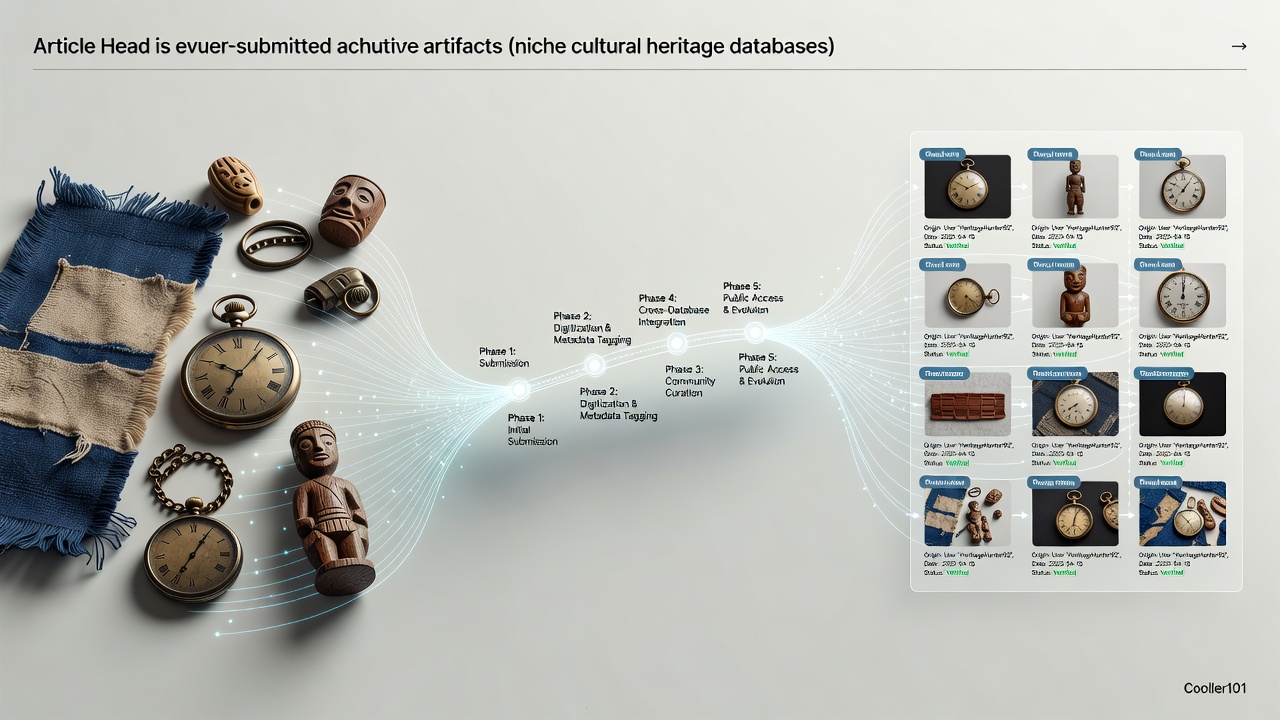
Noah Frank · 7 October 2026
Tracing the Evolution of User-Submitted Artifacts in Niche Cultural Heritage Databases
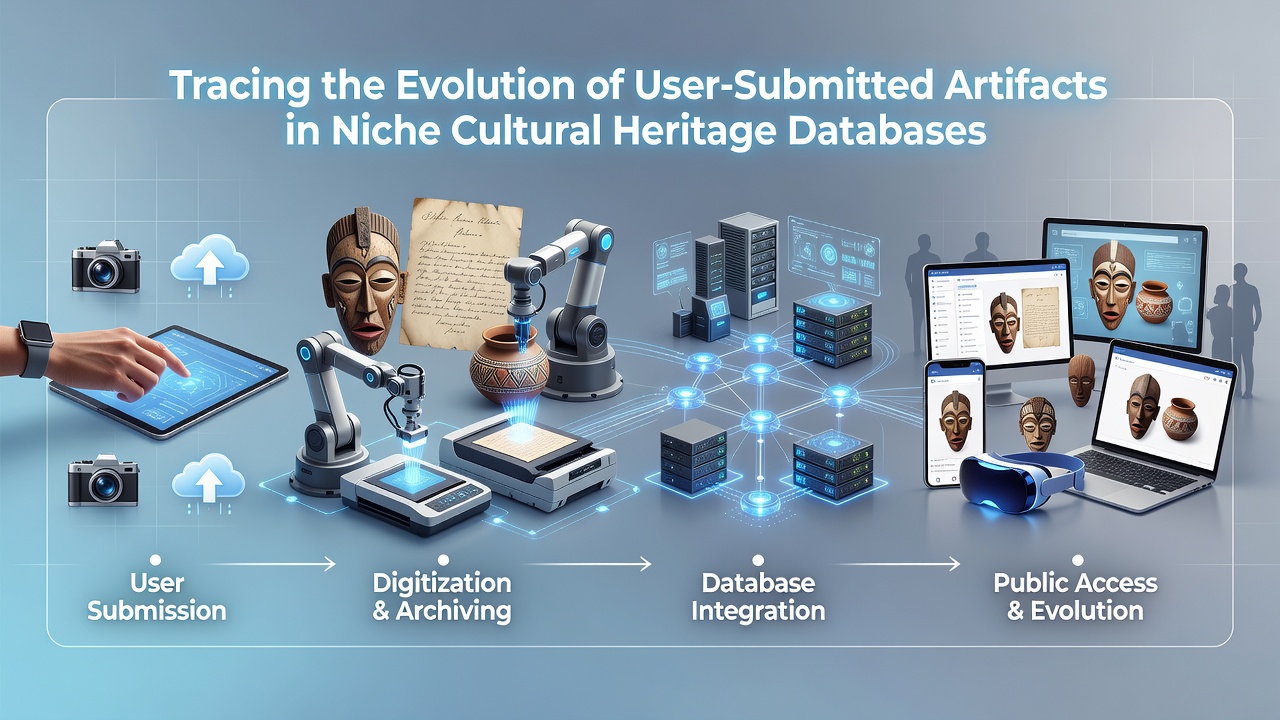
Researchers tracking digital preservation efforts note that niche cultural heritage databases emerged in the late 1990s as institutions began digitizing local collections and inviting public contributions, and this shift marked a departure from purely institutional control over historical records. Early platforms relied on basic web forms for uploads, where contributors submitted photographs, oral histories, and scanned documents that institutions then reviewed before adding them to static catalogs, while limited bandwidth and simple database structures constrained the volume and complexity of incoming material.
Initial Development Phases in Regional Archives
Observers point out that community-driven projects in places like rural Australia and parts of Eastern Europe started with volunteer networks scanning family albums and transcribing letters, and these grassroots efforts fed into centralized repositories that used early metadata standards such as Dublin Core to organize submissions. Data from national library initiatives shows that by the mid-2000s, several European regional archives had opened online portals allowing residents to tag their own items with geographic coordinates and dates, which in turn improved searchability across collections that previously existed only in physical form.
Technological Shifts and Crowdsourcing Growth
Platforms adapted to rising internet speeds and mobile devices around 2010, enabling direct smartphone uploads of artifacts like folk costume images and local festival recordings, while automated tools began assisting with initial categorization. Studies from academic institutions indicate that user submissions increased significantly once interfaces incorporated social features such as comment threads and collaborative editing, although institutions maintained approval layers to verify accuracy and manage copyright claims. One notable expansion occurred when Canadian provincial archives integrated user portals with existing GIS mapping systems, allowing contributors to link personal stories to specific locations on interactive maps that drew from public domain records.
Metadata Standards and Quality Control Evolution
Standards bodies updated protocols over successive years to accommodate richer descriptions from non-experts, and this included fields for emotional context or community significance that traditional cataloging had omitted. Figures from heritage organizations reveal that verification processes moved from manual review by small staff teams to hybrid models combining expert oversight with community flagging systems, which reduced backlog times while preserving institutional authority over final entries. Researchers have documented how training modules developed by universities helped contributors learn consistent terminology, leading to fewer rejected submissions and higher rates of reuse in educational projects.
Integration with Emerging Technologies by 2026
Artificial intelligence tools for image recognition and transcription entered wider use in these databases during the early 2020s, allowing platforms to suggest preliminary tags for uploaded items that users could refine before submission. Reports from the Australian National Archives highlight pilot programs that tested machine learning models trained on regional dialects and handwriting styles, which improved the processing speed for handwritten letters and diaries contributed by families. In October 2026, several European networks plan coordinated updates to their shared APIs, enabling seamless cross-referencing between niche collections that focus on specific themes such as industrial labor history or indigenous craft traditions.
Observers note that privacy regulations introduced in multiple jurisdictions required databases to implement clearer consent mechanisms for user data attached to artifacts, and this prompted redesigns of submission workflows that now separate personal identifiers from public-facing records. Data indicates that participation rates remained steady or increased in regions where clear guidelines addressed ownership questions, whereas some collections experienced temporary dips during transition periods.
Case Examples Across Geographic Contexts
Take the development path of a Scottish island heritage site that began accepting digital scans of fishing logs in 2005 and later expanded to include video interviews recorded by residents, and similar trajectories appear in Midwestern United States county archives that incorporated user-submitted farm equipment photographs into searchable visual timelines. A project coordinated through a South African university repository demonstrates how mobile-first designs increased contributions from rural areas where desktop access remained limited, resulting in expanded coverage of traditional healing practices documented through community photos and audio clips. These examples illustrate incremental adaptations rather than wholesale reinvention, as each platform built upon existing infrastructure while responding to local contributor needs.
Conclusion
Databases focused on niche cultural heritage continue to refine submission pathways through successive technological and policy adjustments, and records show steady growth in both the quantity and variety of user-contributed artifacts preserved for future reference. Institutions maintain core responsibilities for curation even as public involvement expands, and ongoing developments in metadata handling and verification support broader access without compromising established standards.